
Radiofrequency Ablation for Back Pain
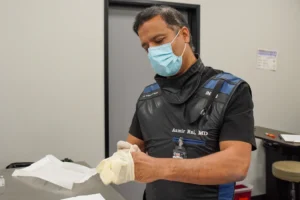 Chronic back pain can be frustrating, limiting, and difficult to manage when conservative treatments no longer provide lasting relief. For many patients, radiofrequency ablation (RFA) offers a minimally invasive option that targets pain at its source without surgery.
At Pain & Spine Physicians, we use advanced, image-guided techniques to help patients reduce pain, improve function, and safely return to daily activities with confidence. If ongoing back pain is interfering with your quality of life, call (972) 350-0225 to learn whether radiofrequency ablation may be right for you.
What Is Radiofrequency Ablation?
Radiofrequency ablation is a minimally invasive procedure designed to reduce chronic back pain caused by irritated or arthritic spinal joints. The procedure works by using controlled radiofrequency energy to interrupt pain signals traveling from specific nerves to the brain. By preventing these nerves from transmitting pain, patients may experience significant and long-lasting relief.
RFA does not remove tissue or alter spinal structure. Instead, it focuses on disabling the small sensory nerves responsible for sending pain signals from affected facet joints in the spine. Because these nerves do not control muscle strength or sensation in the limbs, the procedure is considered both safe and precise when performed by trained physicians.
How Radiofrequency Ablation Works
Before radiofrequency ablation is recommended, patients typically undergo diagnostic nerve blocks. These temporary injections help confirm that specific facet joints are the source of pain. If pain relief is achieved after these blocks, radiofrequency ablation may be an appropriate next step.
During the procedure, a thin needle is guided to the targeted nerve using advanced imaging, such as fluoroscopy. Once proper placement is confirmed, radiofrequency energy is delivered through the needle to gently heat the nerve. This process disrupts the nerve’s ability to transmit pain signals while leaving surrounding tissues unharmed.
The procedure is typically performed in an outpatient setting and does not require general anesthesia. Most patients return home the same day.
Conditions Treated With Radiofrequency Ablation
Radiofrequency ablation is most commonly used to treat pain originating from facet joints, which are small stabilizing joints located along the spine. These joints play an important role in guiding movement and maintaining spinal alignment. Over time, natural wear and tear, injury, or repetitive stress can cause the facet joints to become inflamed or arthritic, leading to stiffness, localized pain, and reduced range of motion in the neck or lower back.
RFA may be effective for patients with:
- Degenerative disc-related facet joint pain;
- Spinal arthritis affecting the cervical or lumbar spine;
- Chronic neck pain; and
- Persistent lower back pain that has not responded to conservative care such as physical therapy, activity modification, or medication.
Many individuals experience pain that is worse in the morning, after long periods of sitting, or during activities that require bending, twisting, or prolonged standing. These patterns often point to facet joint involvement, making RFA a potential treatment option.
Radiofrequency ablation is also commonly used for patients who experience referred pain from the spine into the shoulders, hips, or buttocks, without significant nerve compression into the arms or legs.
This type of pain is often mechanical in nature and related to joint irritation rather than disc herniation. Proper diagnostic testing, including targeted nerve blocks, helps confirm whether these joints are the true source of discomfort.
By carefully selecting radiofrequency ablation treatment based on symptoms, imaging findings, and response to diagnostic injections, we can provide meaningful relief for individuals seeking a non-surgical solution to chronic spine-related pain.
Benefits of Radiofrequency Ablation
One of the primary benefits of radiofrequency ablation is the duration of relief it may provide. While results vary, many patients experience pain reduction lasting six months to over a year. Because the treated nerves can regenerate over time, the procedure may be repeated if pain returns.
Additional benefits may include:
- No surgery involved, no incision or surgery involved with minimal down time
- Reduced reliance on medications;
- Improved mobility;
- Greater ability to participate more fully in physical therapy or daily activities.
RFA is also considered a safer alternative to traditional spine surgery for appropriately selected patients, offering faster recovery times and fewer risks. At Pain & Spine Physicians, we perform RFA using modern technology in a controlled, in-office setting, allowing for cost-effective care without unnecessary hospital visits.
What to Expect During Recovery
Recovery after radiofrequency ablation is generally straightforward. Some patients experience mild soreness or stiffness at the treatment site for several days following the procedure. This is normal and typically resolves with time.
Pain relief may not be immediate. It can take one to three weeks for the full effects of the procedure to be felt as inflammation decreases and nerves stop transmitting pain signals. Most patients resume normal activities within a short period, following guidance provided by their physician. Patients who are committed to their recovery and follow post-procedure recommendations often experience better and longer-lasting results.
Is Radiofrequency Ablation Right for You?
Radiofrequency ablation is not appropriate for all types of back pain. It is most effective when pain originates from facet joints and when diagnostic testing confirms nerve involvement. A thorough evaluation is essential to determine whether RFA aligns with your condition and goals.
A Comprehensive Approach to Back Pain Relief
All of our physicians are board-certified and bring extensive experience to each procedure. We take a comprehensive approach to care, considering your medical history, imaging results, and response to prior treatments before making recommendations.
Radiofrequency ablation is most effective when combined with a broader treatment plan focused on long-term spine health. This may include:
- Physical rehabilitation
- Posture correction
- Strengthening exercises
- Lifestyle guidance aimed at reducing strain on the spine
At Pain & Spine Physicians, we emphasize technically advanced, minimally invasive procedures that support holistic wellness and overall health development. Our goal is not just to reduce pain, but to help patients move better, function more comfortably, and maintain lasting improvement.
Take the Next Step Toward Lasting Relief
If chronic back pain has not improved with conservative care, radiofrequency ablation may offer the relief you have been searching for. Call (972) 350-0225 or contact us online to schedule an evaluation with Pain & Spine Physicians. We are here to help patients who are motivated, compliant with care recommendations, and ready to take an active role in their recovery move forward with confidence and comfort.